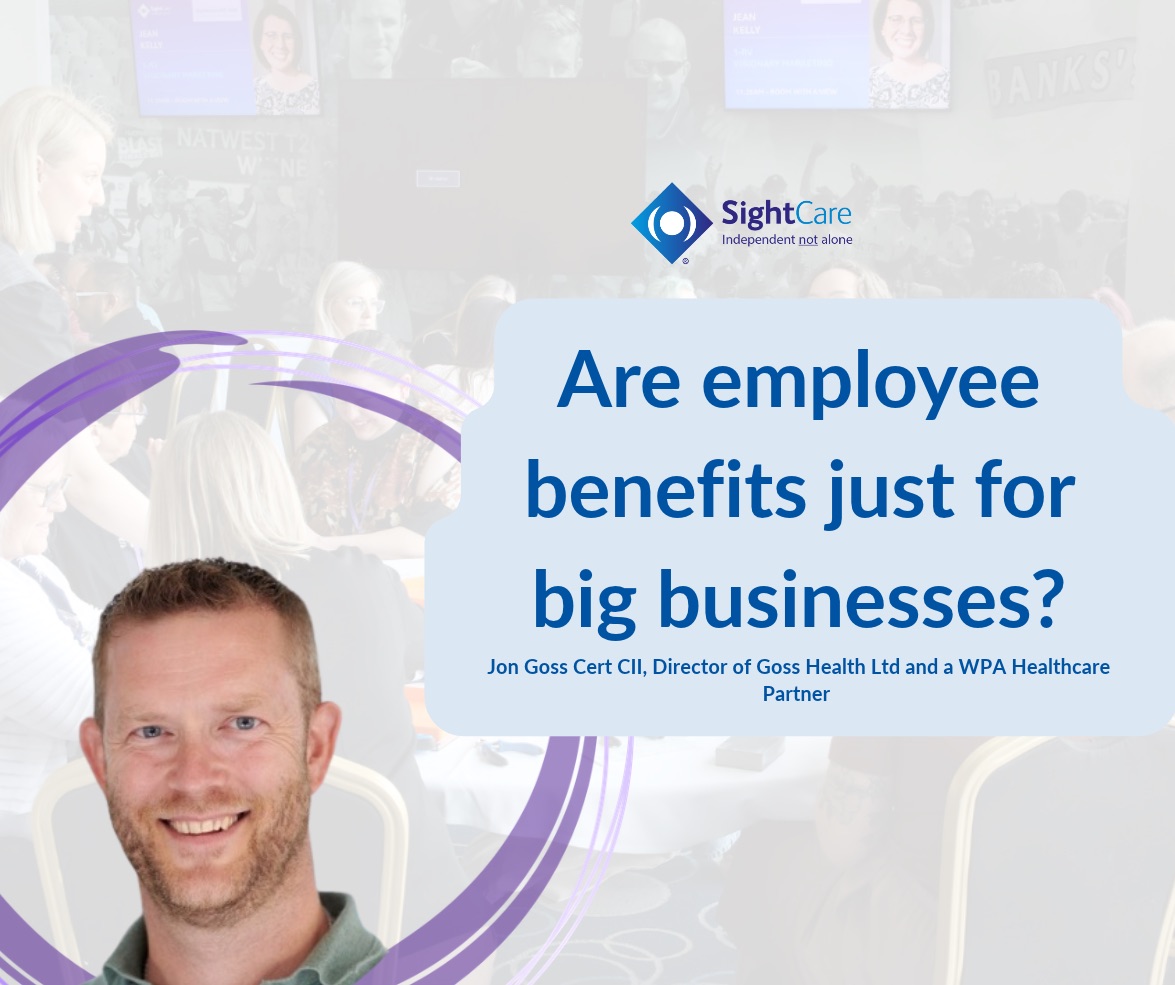
Jon Goss: Are employee benefits just for big businesses?
Running an independent optical practice means wearing a lot of hats. From looking after patients and managing appointments to running a business and supporting your team, there is always plenty to think about.
Employee benefits might not always be top of the list. They can seem complicated, expensive or something best left to larger businesses with dedicated HR teams. But is that really the case?
In my experience, you don’t need a large workforce or a big budget to make a difference to your employees. It’s about understanding what matters to your team and finding practical ways to support them.
Why benefits matter
Recruiting and retaining good people is important to any business, but particularly in a smaller practice where every member of the team plays a valuable role. Losing an experienced employee can affect patient relationships, team morale and the day-to-day running of the business.
Salary will always matter, but it isn’t the only thing employees consider. Feeling valued, having some flexibility and knowing their employer cares about their wellbeing can all contribute to a positive working environment.
You don’t have to do everything
One of the biggest misconceptions is that employee benefits have to be expensive or comprehensive to be worthwhile.
For a small practice, it might start with something straightforward: reviewing working patterns, offering flexibility where possible, supporting professional development or making sure employees know they are appreciated.
It is also worth considering whether more structured benefits could help. Depending on the needs of your team and your budget, options might include a health cash plan to help with everyday healthcare costs, private medical insurance, or access to employee assistance and wellbeing services. These are different options, with different costs and levels of cover, so it is important to understand what each provides before making a decision.
The key is not to offer benefits simply because another business does. Choose something that has a clear purpose and is realistic for your practice to maintain.
Think about the cost of doing nothing
Employee wellbeing is not just about offering attractive extras. It can also be about helping people access support when they need it.
The CIPD’s 2025 Health and Wellbeing at Work report found that average employee sickness absence had risen to 9.4 days per employee a year, the highest level recorded in more than 15 years in its survey.
For a small optical practice, the absence of just one person can have a noticeable impact. Appointments may need rearranging, colleagues may have to take on additional work, and the pressure on the remaining team can increase.
Benefits alone will not prevent illness or absence, of course. But access to appropriate support, combined with a positive workplace culture, can form part of a sensible approach to employee health and wellbeing.
Start with a conversation
Before committing to a new benefit, ask your team what they value. You might be surprised by the answers.
Consider what you can comfortably afford, what would be most useful to your employees and how you will explain the benefit to them. There is little value in investing in something if your team does not understand it or know how to use it.
It is also worth reviewing your offering periodically as your practice grows and your employees’ needs change.
For independent practices, the advantage is often the personal relationship between employer and employee. You know your team, understand the pressures they face and can have conversations that might be harder in a much larger organisation.
Employee benefits are not just for big businesses. The right approach for a smaller practice may look different, but it can still help people feel valued and supported.
Ultimately, it is not about having the biggest package. It is about making thoughtful choices that work for your people and your business.
About the author
Jon Goss Cert CII is Director of Goss Health Ltd and a WPA Healthcare Partner, helping individuals and businesses understand their health insurance and employee benefit options. With almost 30 years’ experience with WPA, Jon takes a practical, personal approach to helping employers find solutions that work for their business and their people.
Learn more: https://www.cipd.org/uk/knowledge/reports/health-well-being-work/
Learn more about WPA and health insurance over on our member portal.